Latest posts
-
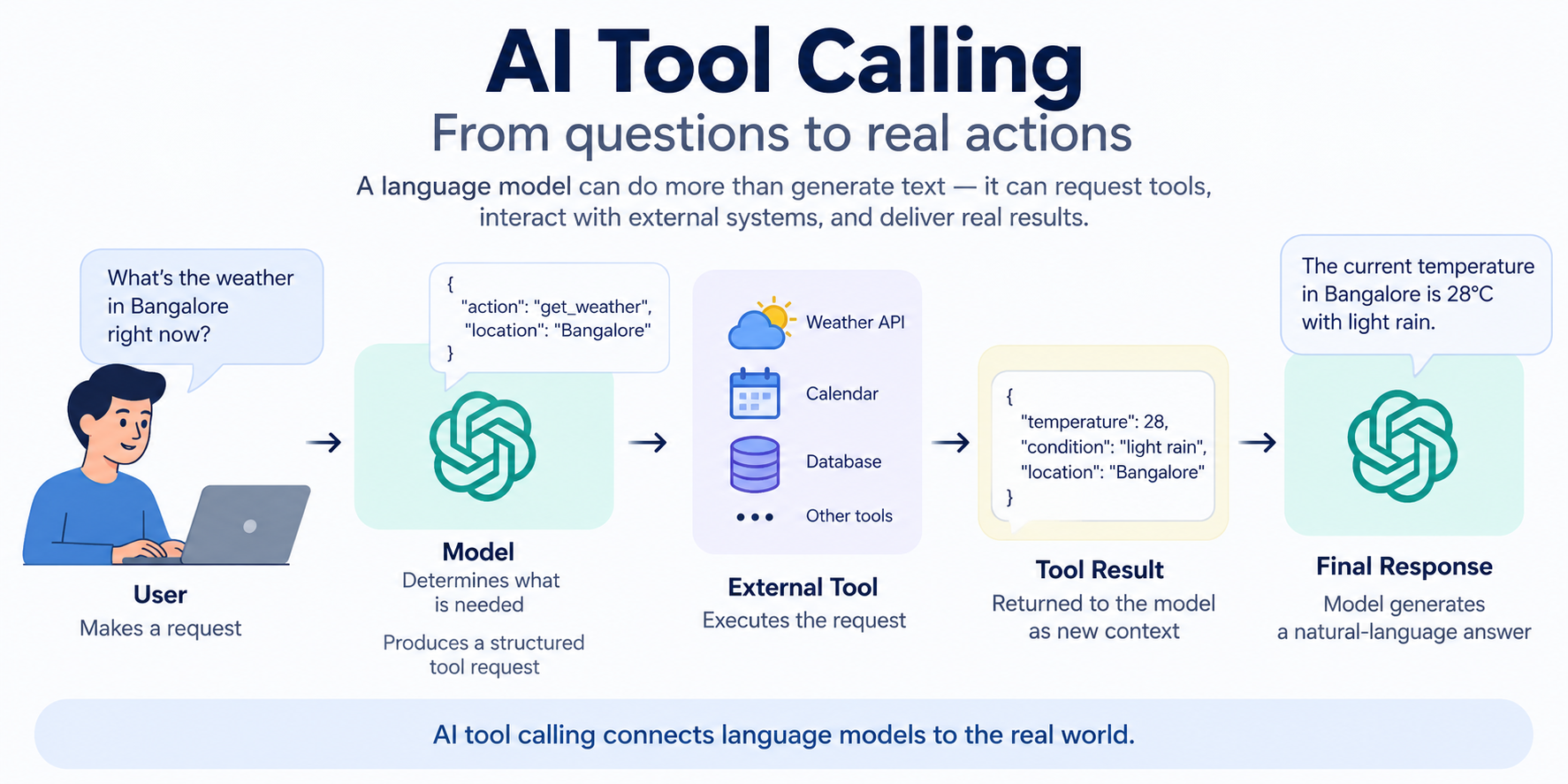
AI Tool Calling: How LLMs Use Tools to Take Actions
A language model can generate text, but by itself it cannot send an email, query a database, check the current weather, or run a piece of code. So how can an AI system move beyond generating text and actually take actions? The answer is AI tool calling. Tool calling gives a language model a structured…
-
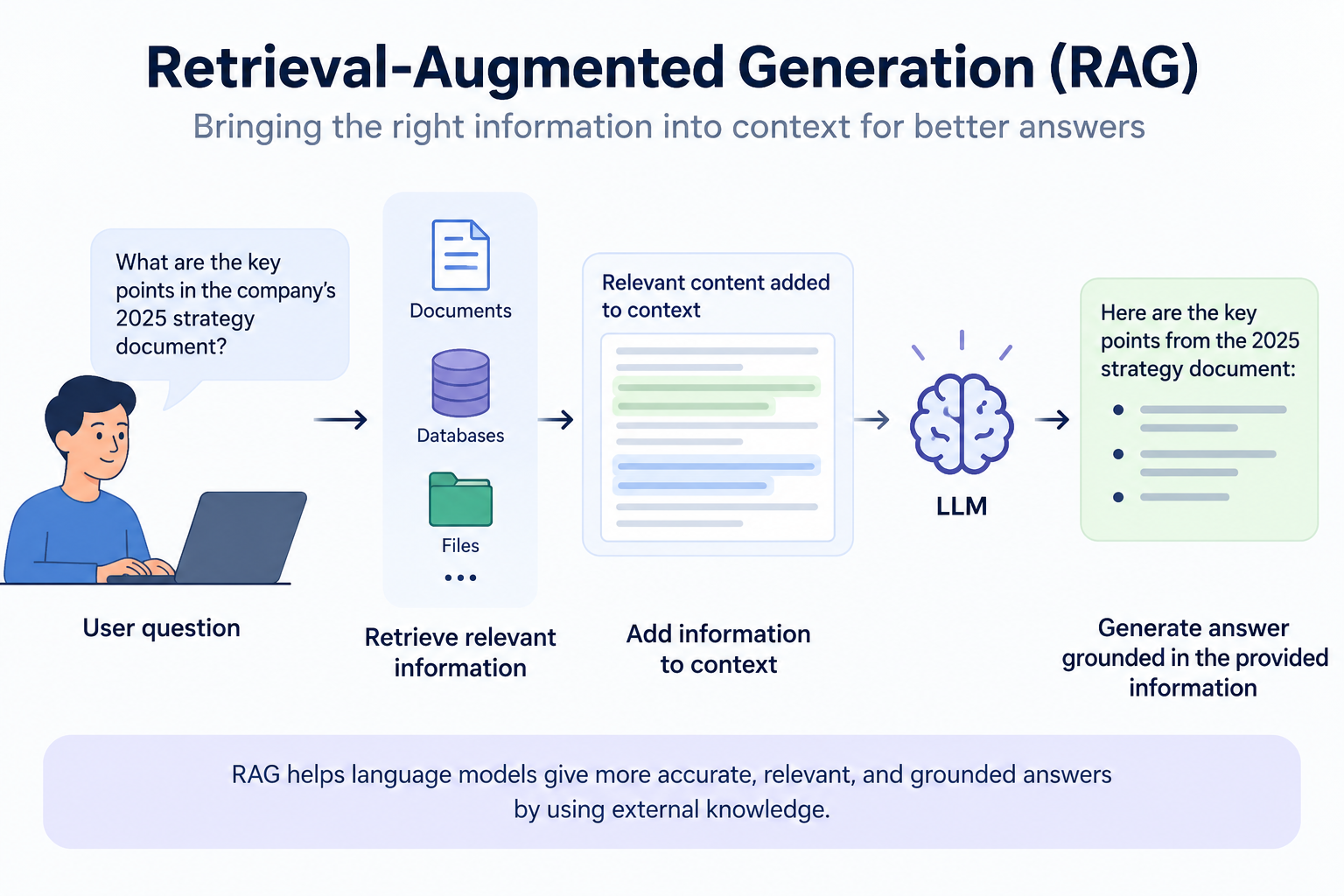
How Retrieval-Augmented Generation (RAG) Uses Context to Improve LLM AnswersHow AI Answers Questions It Was Never Trained On
If a language model only generates responses from what it learned during training and the text in its current input, how can it answer questions about new, highly specific, private, or otherwise unfamiliar information? It can’t reliably do so unless that information is provided to the model at generation time. This is the fundamental idea…
-
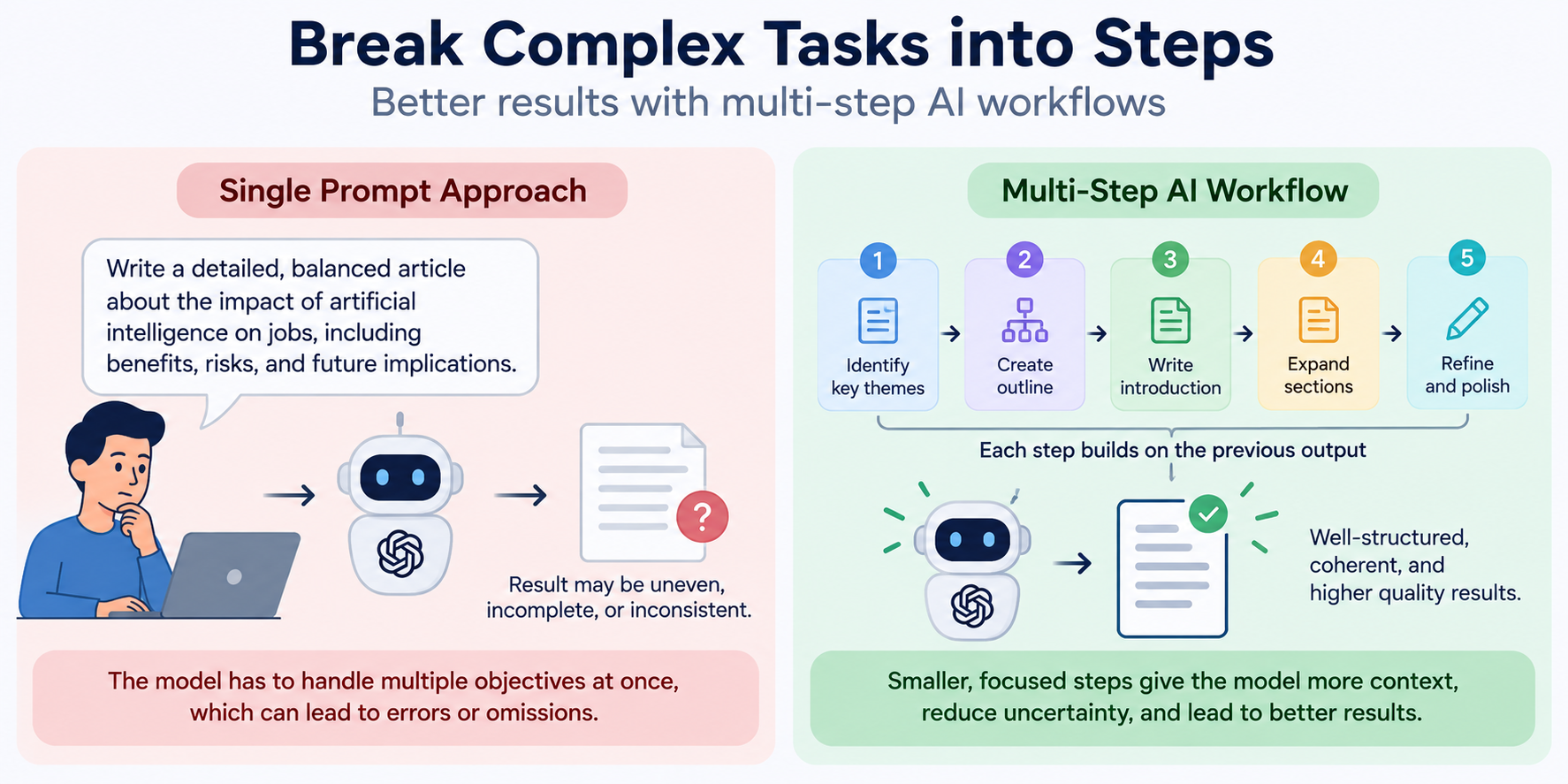
Multi-Step AI Workflows: Why Complex Tasks Need Decomposition
Why can a single prompt fail on a complex task, even when the instructions are clear and well-written? Because complex tasks are rarely single operations. They are usually combinations of multiple distinct steps: understanding the problem, identifying relevant information, organizing it, reasoning about it, and producing the final output. When all of these operations are…
-
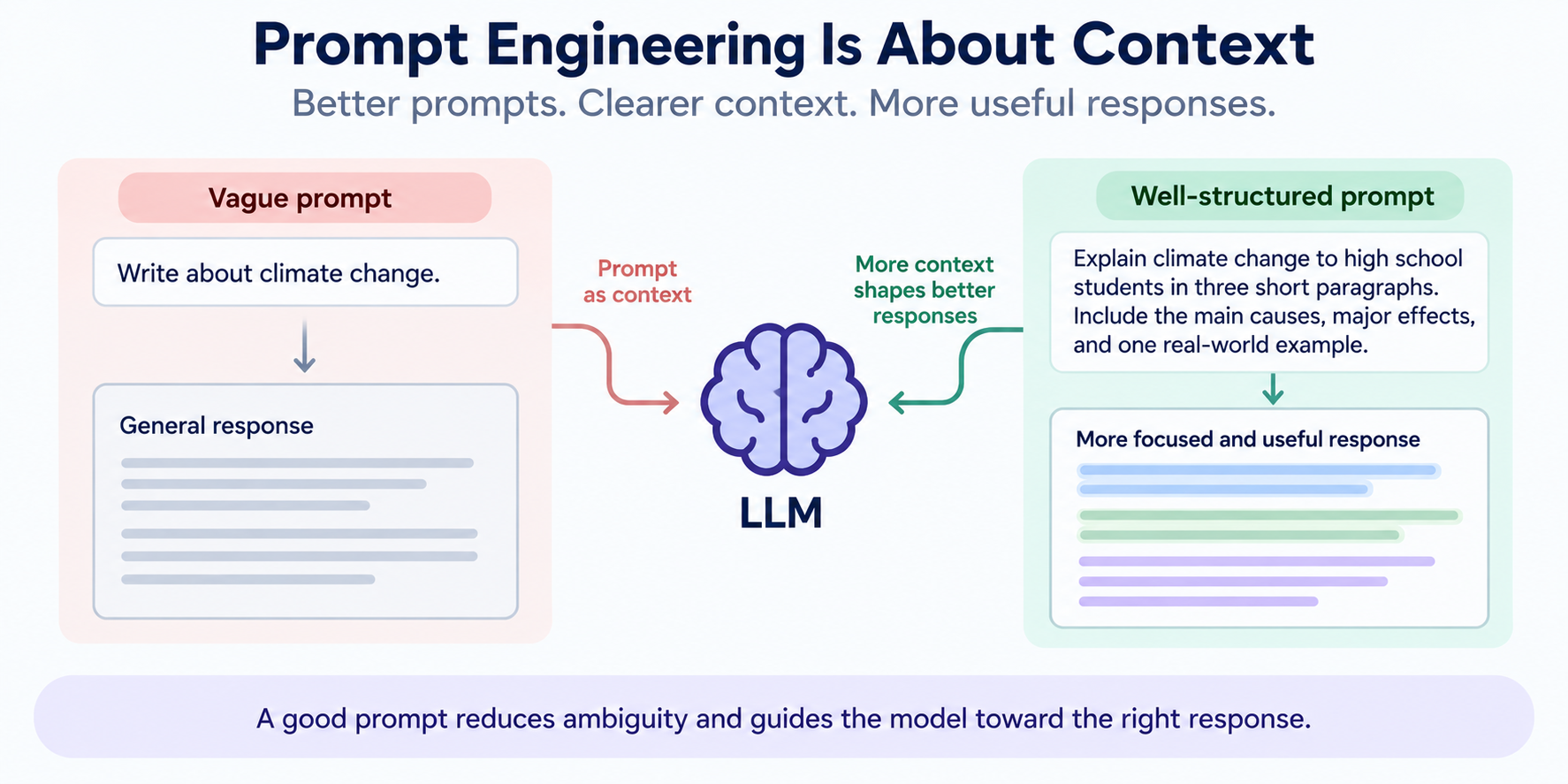
Prompt Engineering: How Context Shapes AI Responses
One of the most common misconceptions about AI is that prompt engineering is about finding the perfect command. It is easy to imagine a language model as a machine waiting for instructions: tell it what to do, and it executes the request. The better the instruction, the better the result. But that is not quite…
-
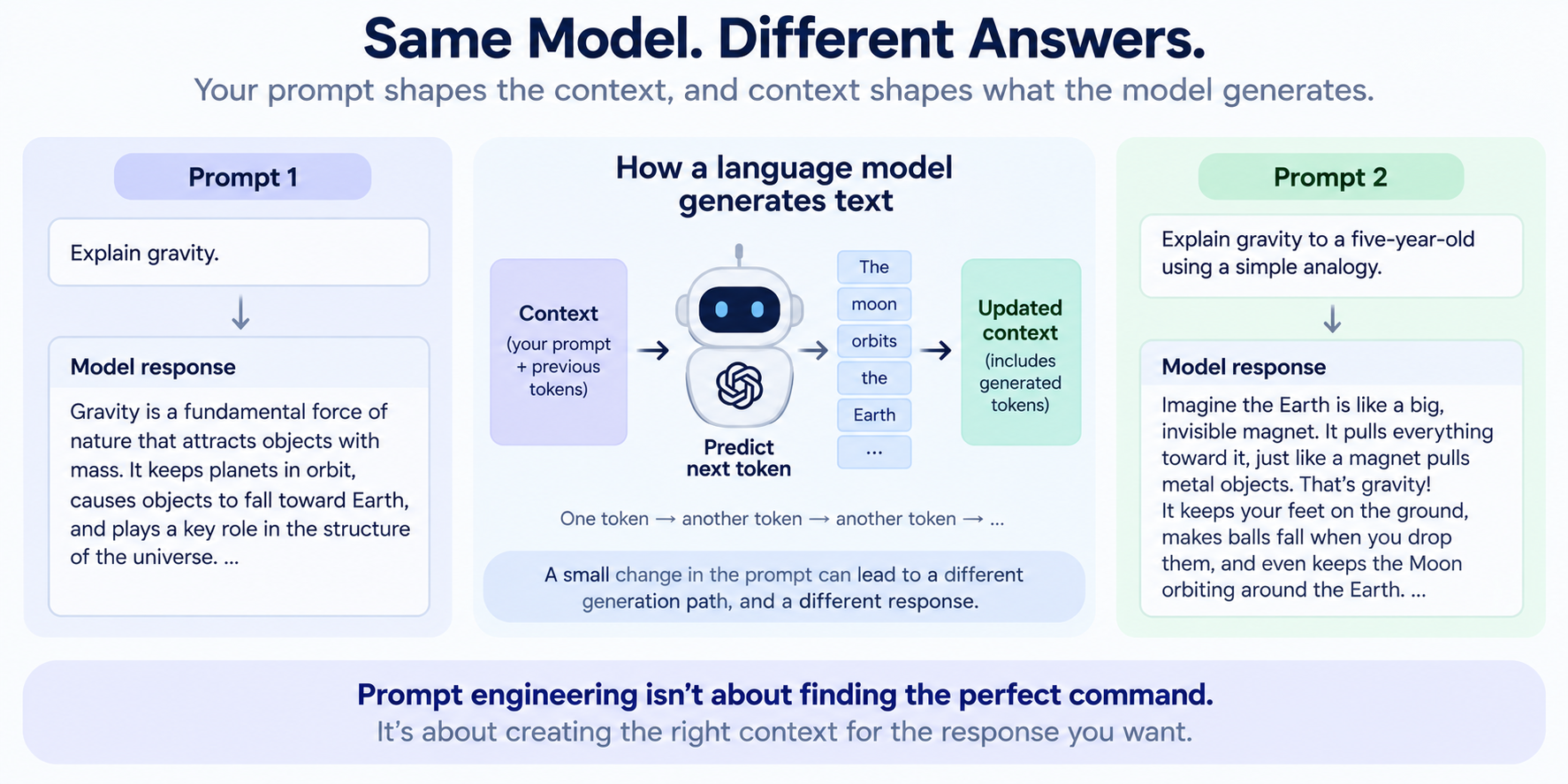
How Large Language Models Generate Text: Tokens, Context, and Prediction
One of the most confusing things about modern AI is that the same language model can give completely different answers to what appears to be the same question. Ask it one way and you might get a detailed explanation. Ask it slightly differently and the tone changes. The structure changes. Sometimes even the conclusion changes.…
-
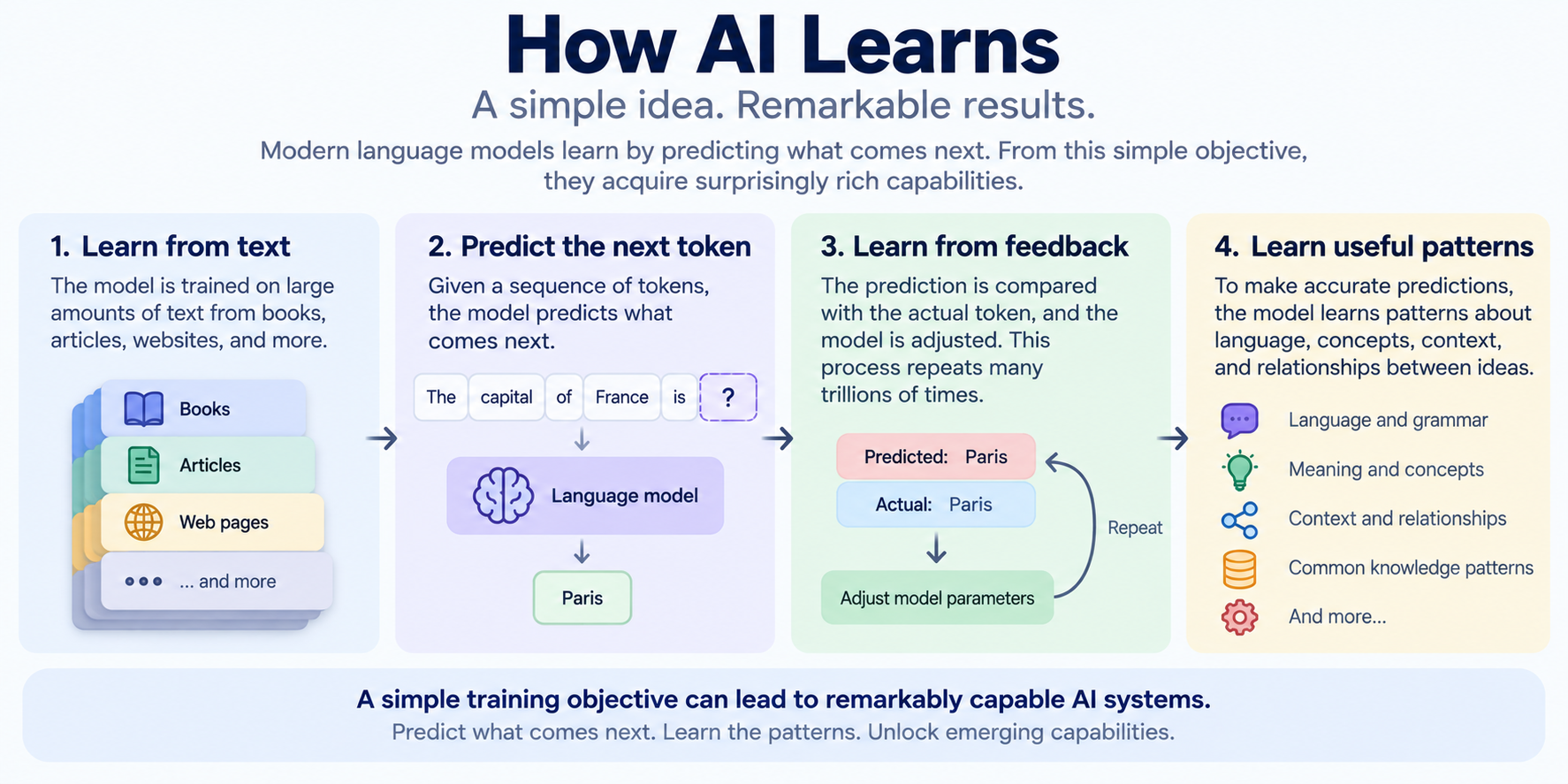
How AI Learns: How Language Models Learn From Data
One of the strangest things about modern AI is that a remarkably simple training objective can produce surprisingly capable systems. Predict what comes next. That’s the basic idea behind how AI learns and the training objective used by many modern language models. Not explicitly solve math problems.Not manually learn grammar rules.Not receive a database of…
-
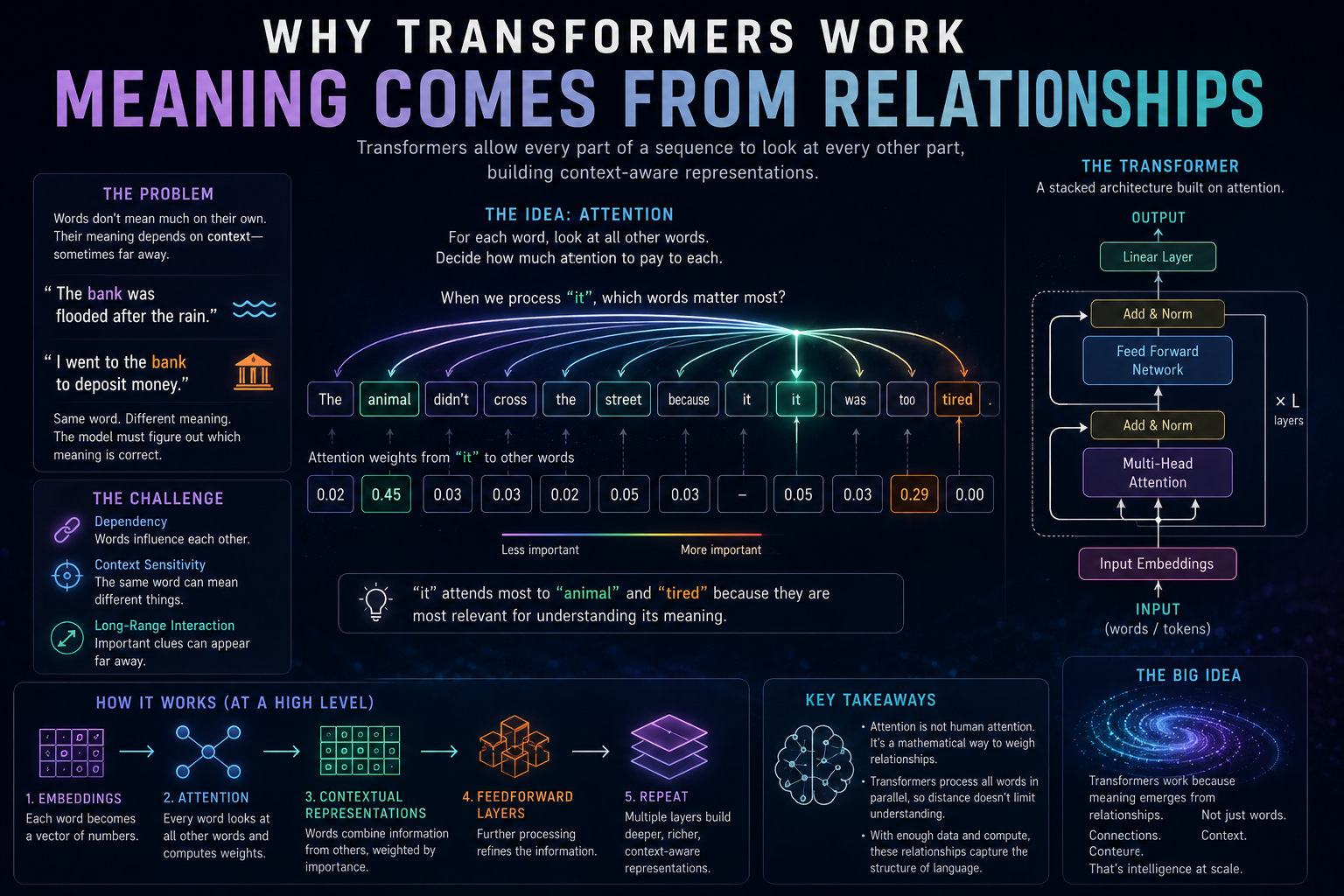
Why Transformers Changed AI
For a long time, one problem kept showing up whenever machines tried to understand language. Words don’t mean much on their own. They mean things because of their relationships to other words. And those relationships can be surprisingly complicated. Take a simple word like “bank.” Without context, it could refer to a financial institution. Or…
-
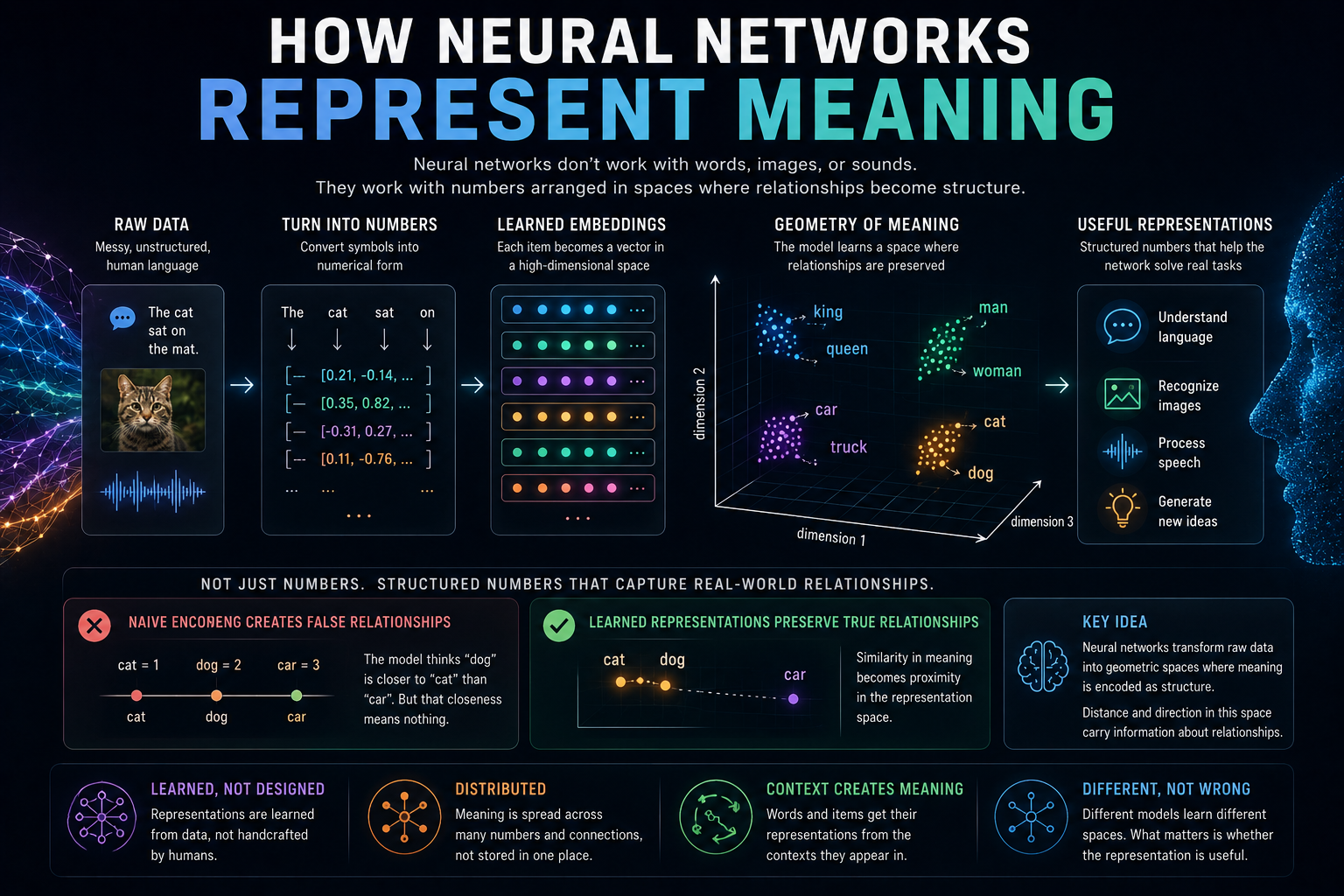
How Neural Networks Represent Meaning
One of the most surprising things about modern AI is that it doesn’t actually work with words. At least not in the way most people imagine. When we interact with a chatbot, it feels like the system is reading language directly. We type words. It responds with words. The entire interaction appears linguistic. But underneath…
-
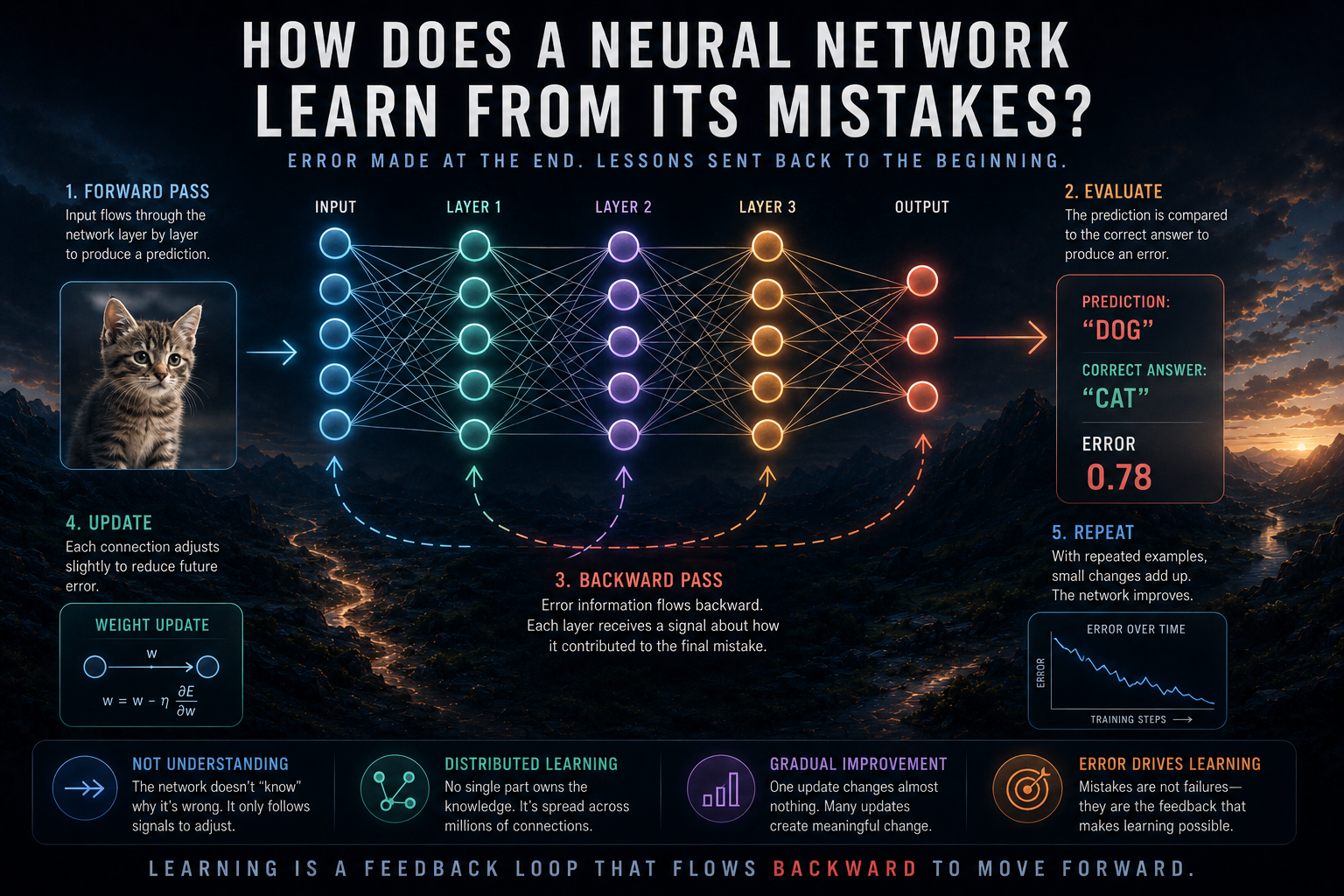
How Does a Neural Network Learn From Its Mistakes?
One of the most interesting questions in AI appears the moment a neural network gets something wrong. The network receives an input. It processes that input through multiple layers. It makes a prediction. And then the prediction turns out to be incorrect. At that point, a simple question emerges: How does the network know what…
-
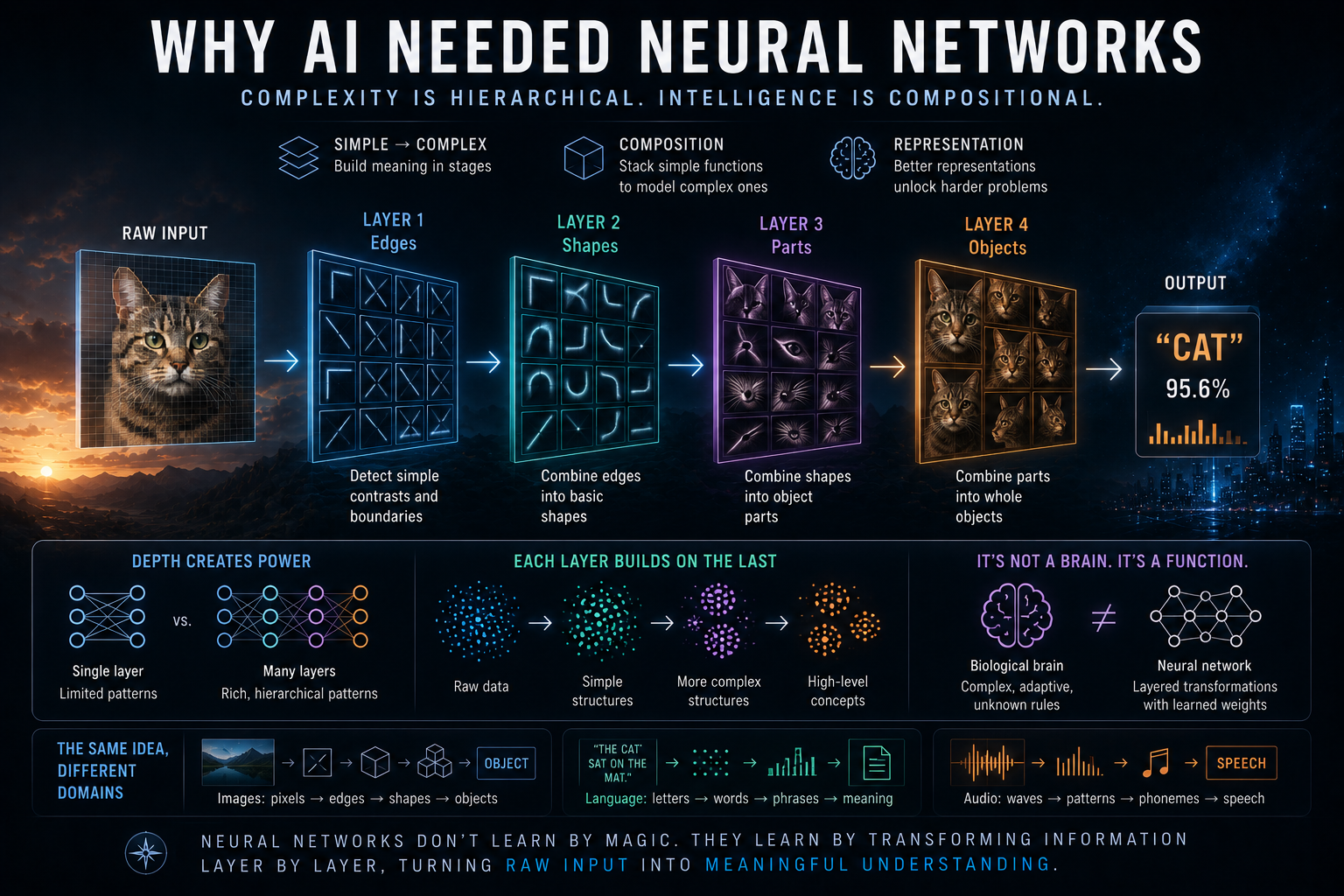
Why AI Needed Neural Networks
One of the most interesting questions in AI is this: If machines were already learning from data, why did we need neural networks? After all, simpler models already worked. They could detect spam.Predict house prices.Identify patterns in data. So what problem were neural networks actually solving? The answer has less to do with intelligence and…