Latest posts
-
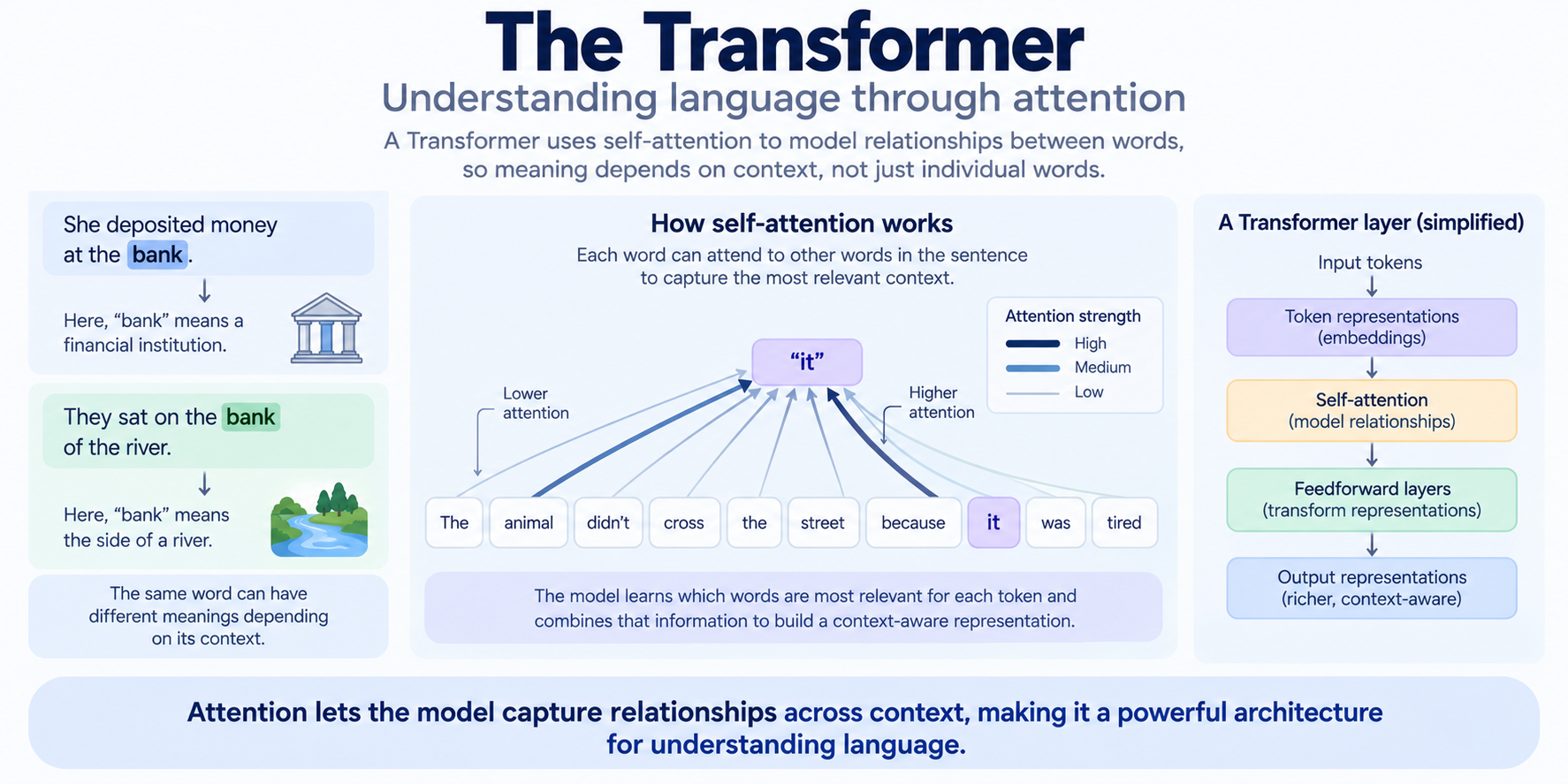
What Is a Transformer? How Attention Changed AI
For a long time, one problem kept appearing whenever machines tried to understand language: words don’t mean much on their own. Their meaning depends heavily on their relationships with other words. And those relationships can be surprisingly complicated. Take a simple word like “bank.” Without context, it could refer to a financial institution. Or the…
-
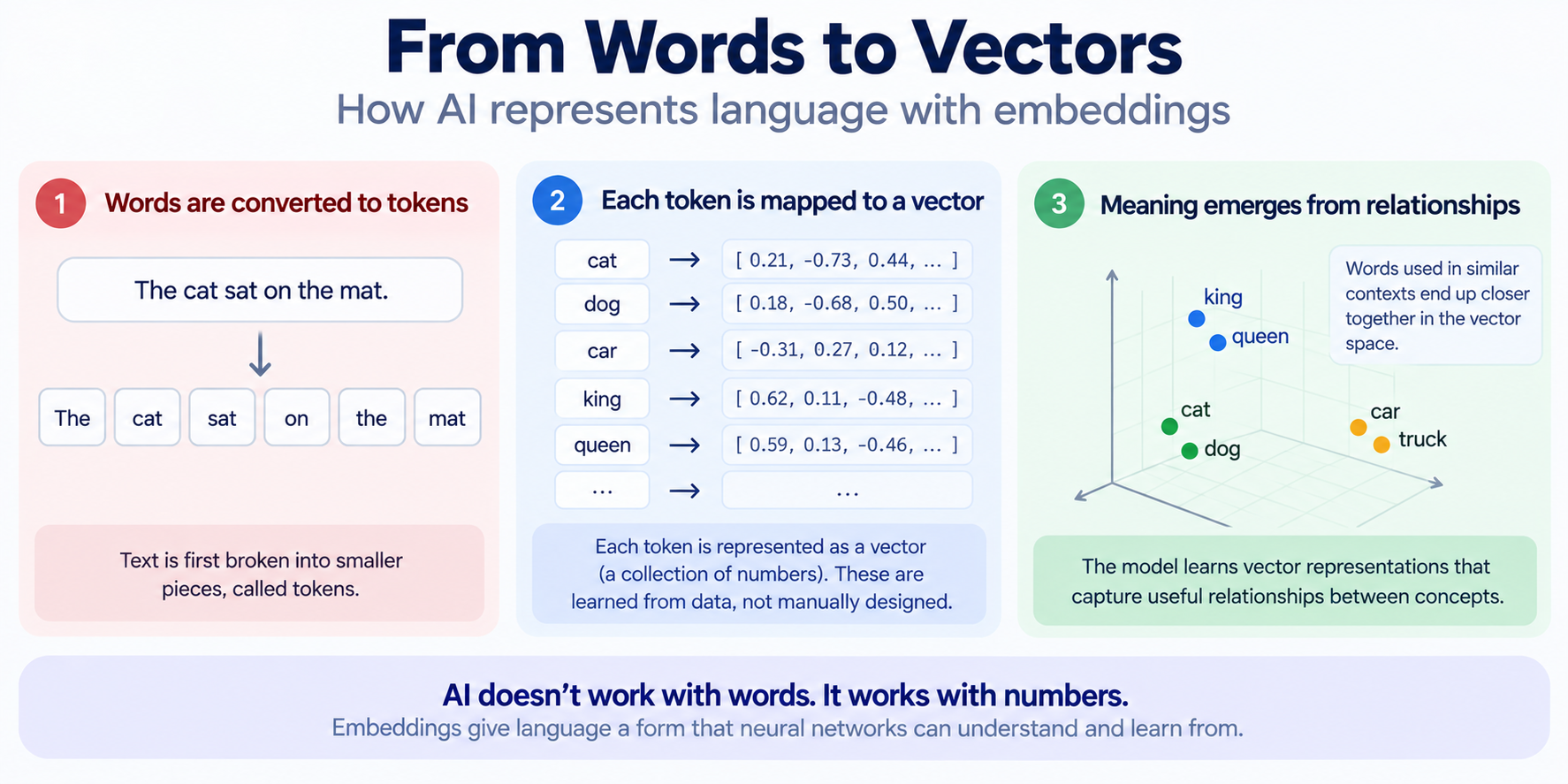
How Neural Networks Represent Meaning: Embeddings and Vectors
One of the most surprising things about modern AI is that it doesn’t actually work with words—not in the way most people imagine. When we interact with a chatbot, it feels like the system is reading language directly. We type words. It responds with words. The entire interaction appears linguistic. But underneath the surface, something…
-
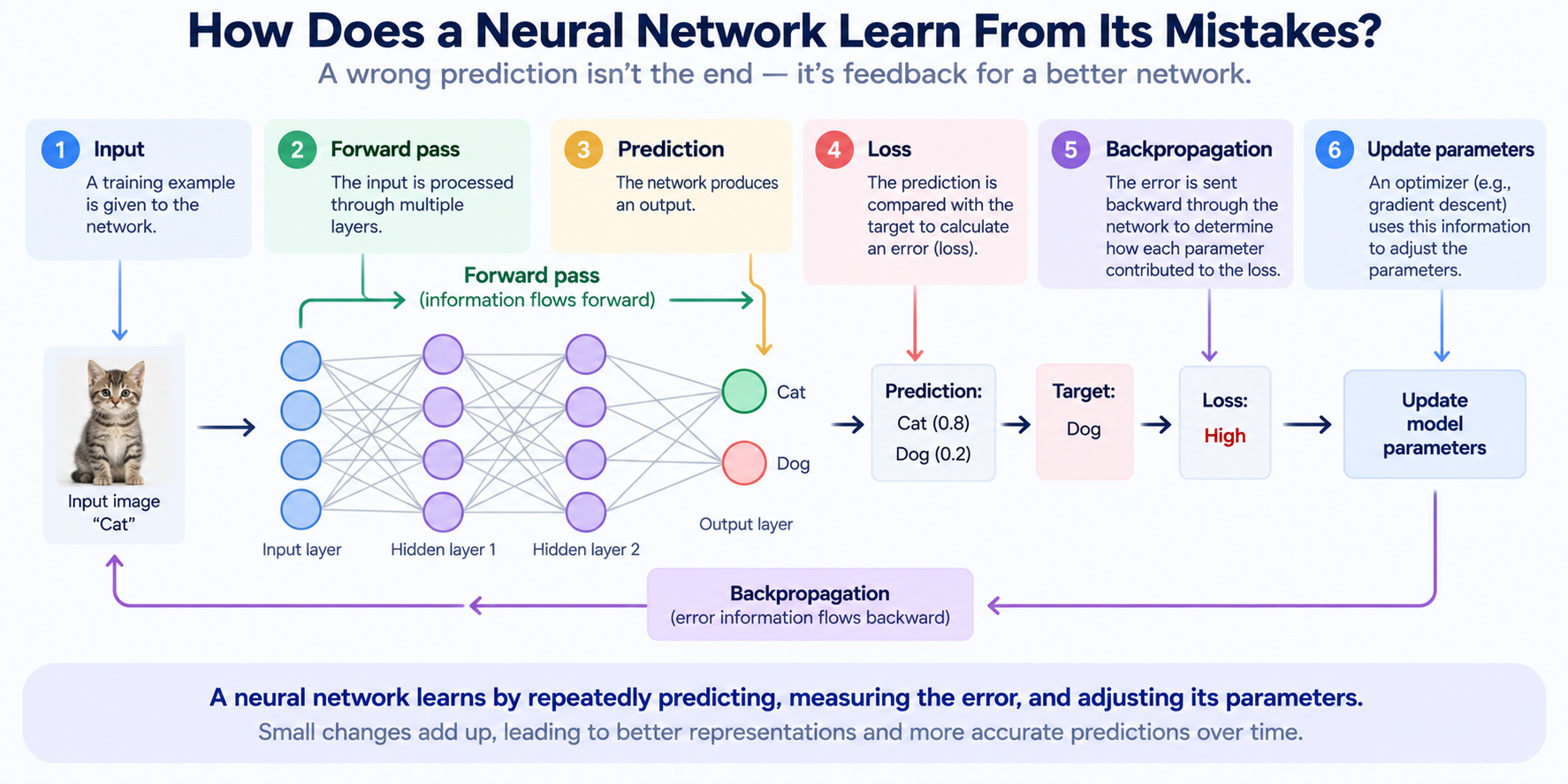
How Does a Neural Network Learn From Its Mistakes?
One of the most interesting questions in AI appears the moment a neural network gets something wrong. The network receives an input. It processes that input through multiple layers. It makes a prediction. Then the prediction turns out to be incorrect. At that point, a simple question emerges: How neural networks learn from its mistakes?…
-
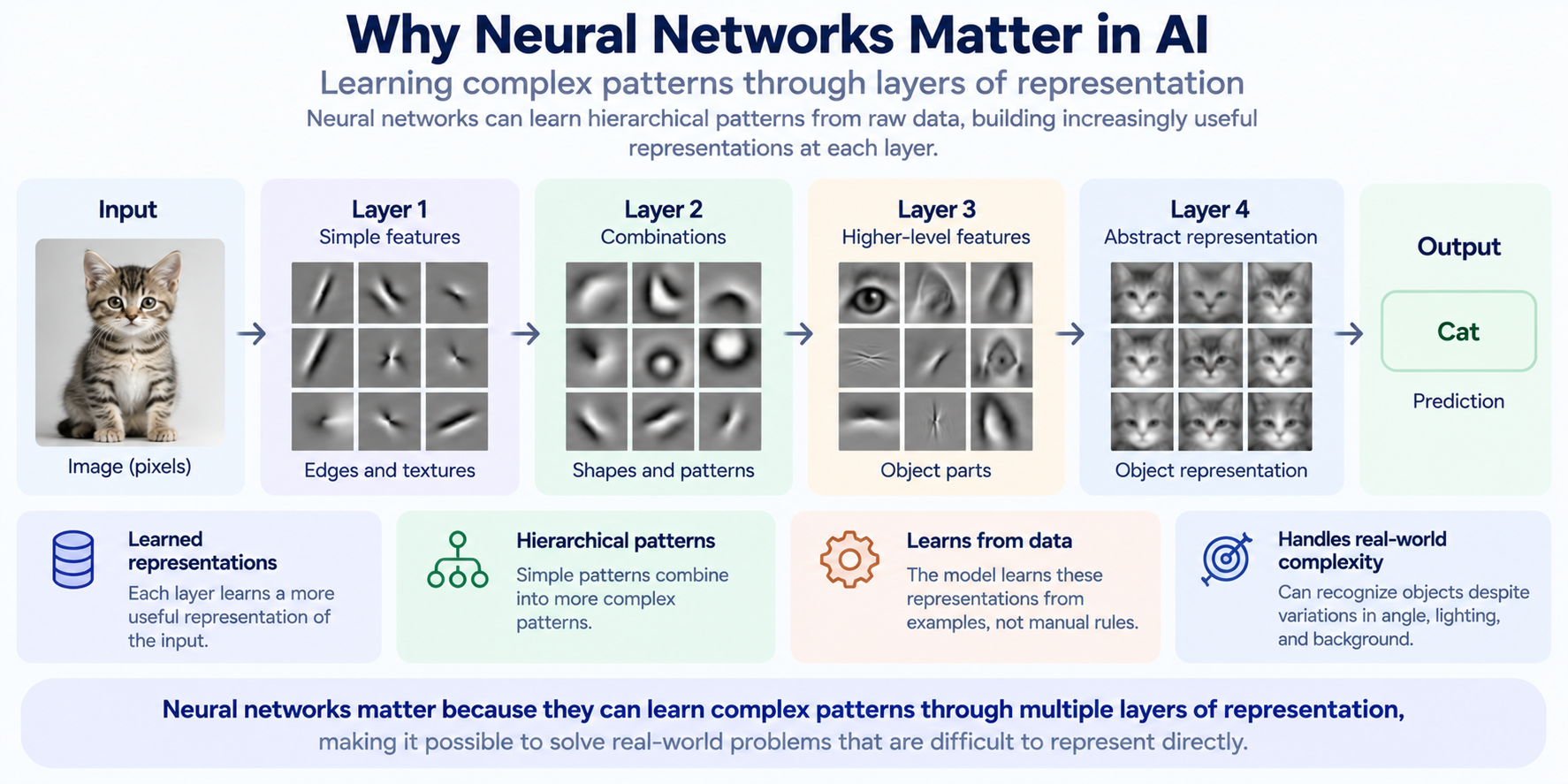
Why Neural Networks Matter in AI: Learning Complex Patterns
One of the most interesting questions in AI is this: If machines were already learning from data, why neural networks? After all, simpler machine-learning models could already do useful things. They could detect spam.Predict house prices.Identify patterns in data. So what problem were neural networks actually solving? The answer has less to do with intelligence…
-
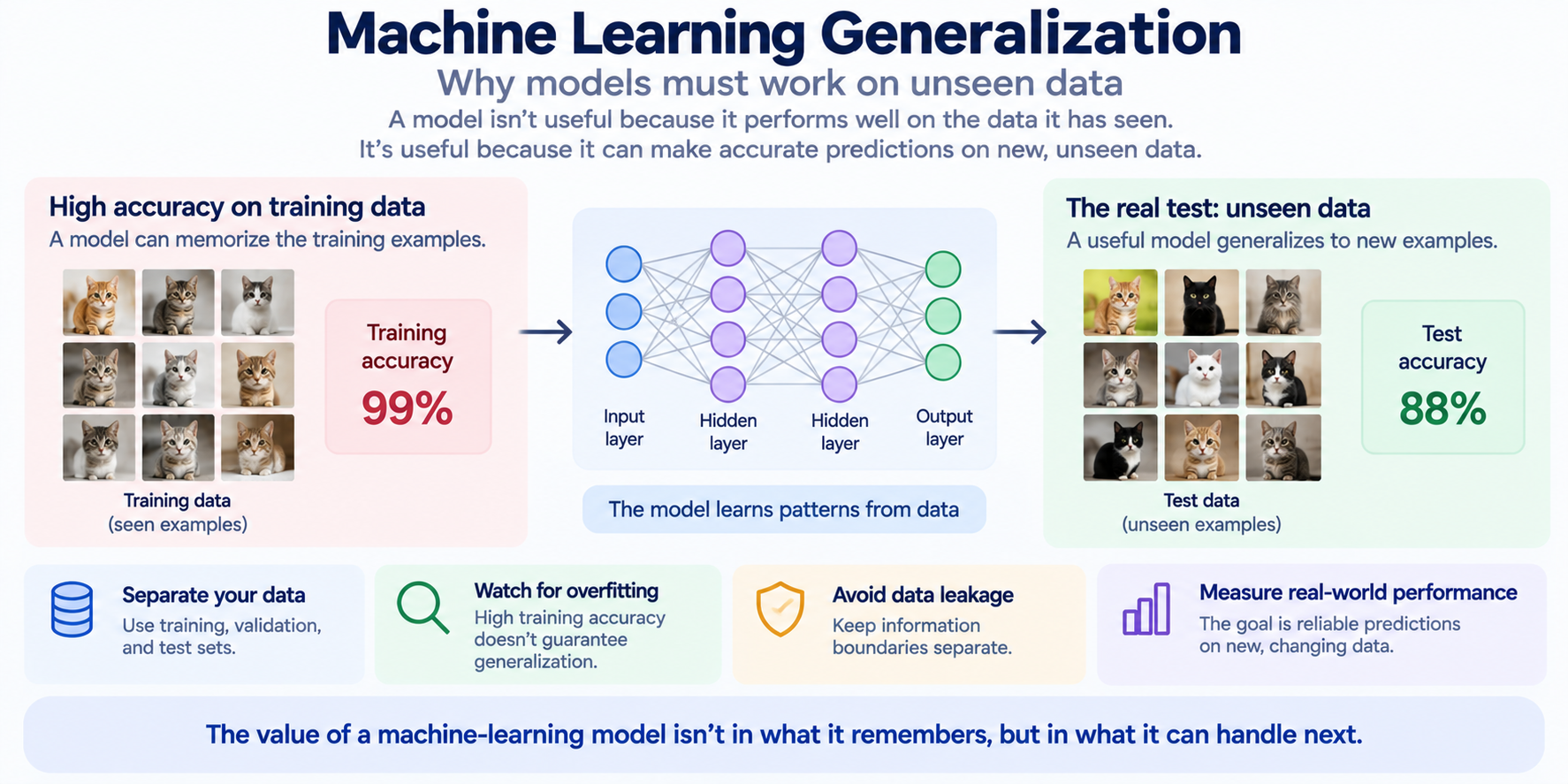
Machine Learning Generalization: Why Models Must Work on Unseen Data
One of the easiest ways to fool ourselves in machine learning is to build a model that appears incredibly accurate—only to discover that it doesn’t work in the real world. At first, that sounds strange. If the model is accurate, shouldn’t it work? Not necessarily. The problem is that performing well on known examples is…
-
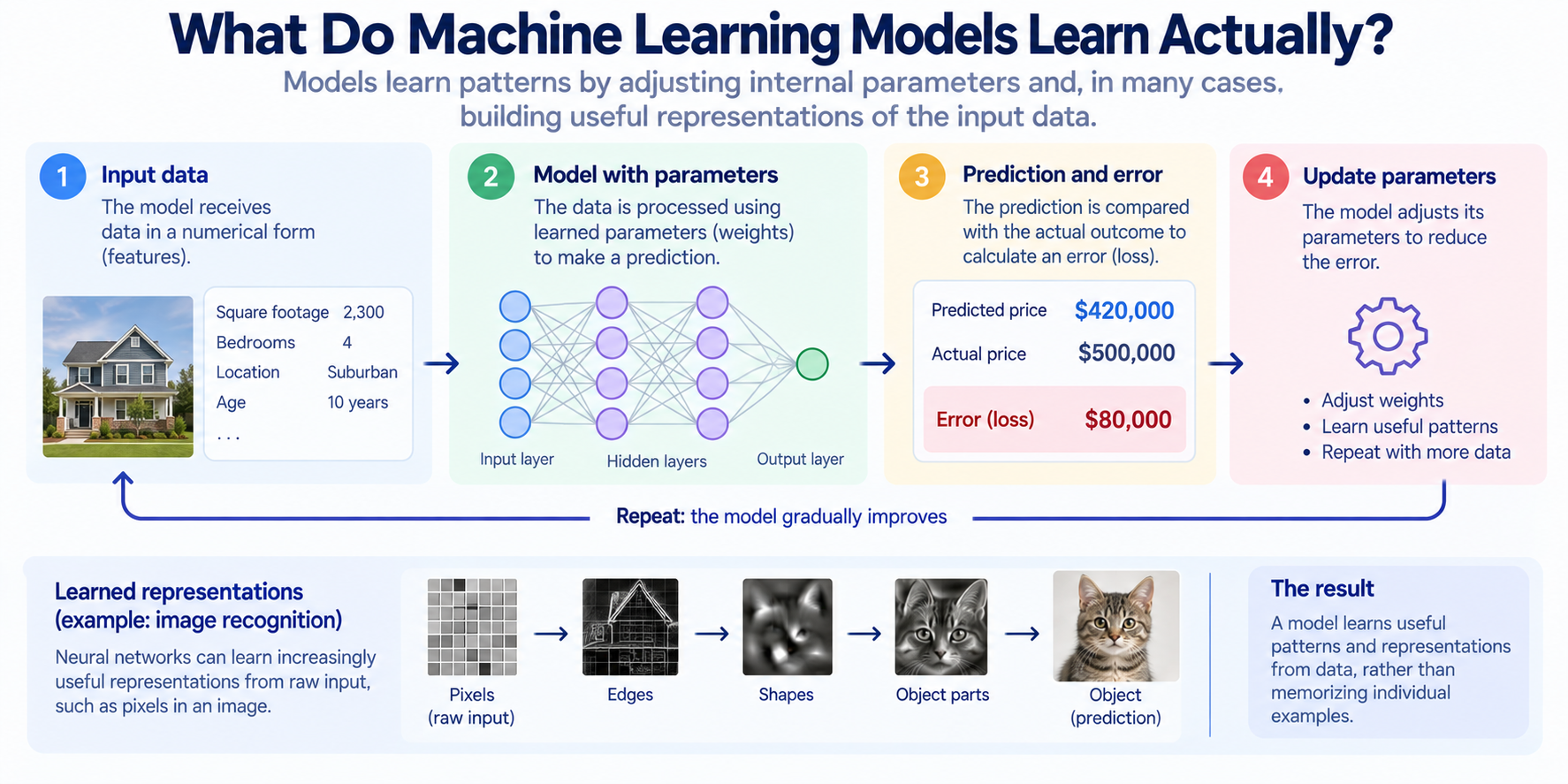
What Do Machine Learning Models Learn Actually?
One of the easiest ways to misunderstand machine learning is to imagine that models somehow “understand” raw data directly. But they don’t. A machine-learning system does not see the world the way humans do. It does not look at a house and intuitively understand neighborhood quality, architecture, or emotional value. It does not read an…
-
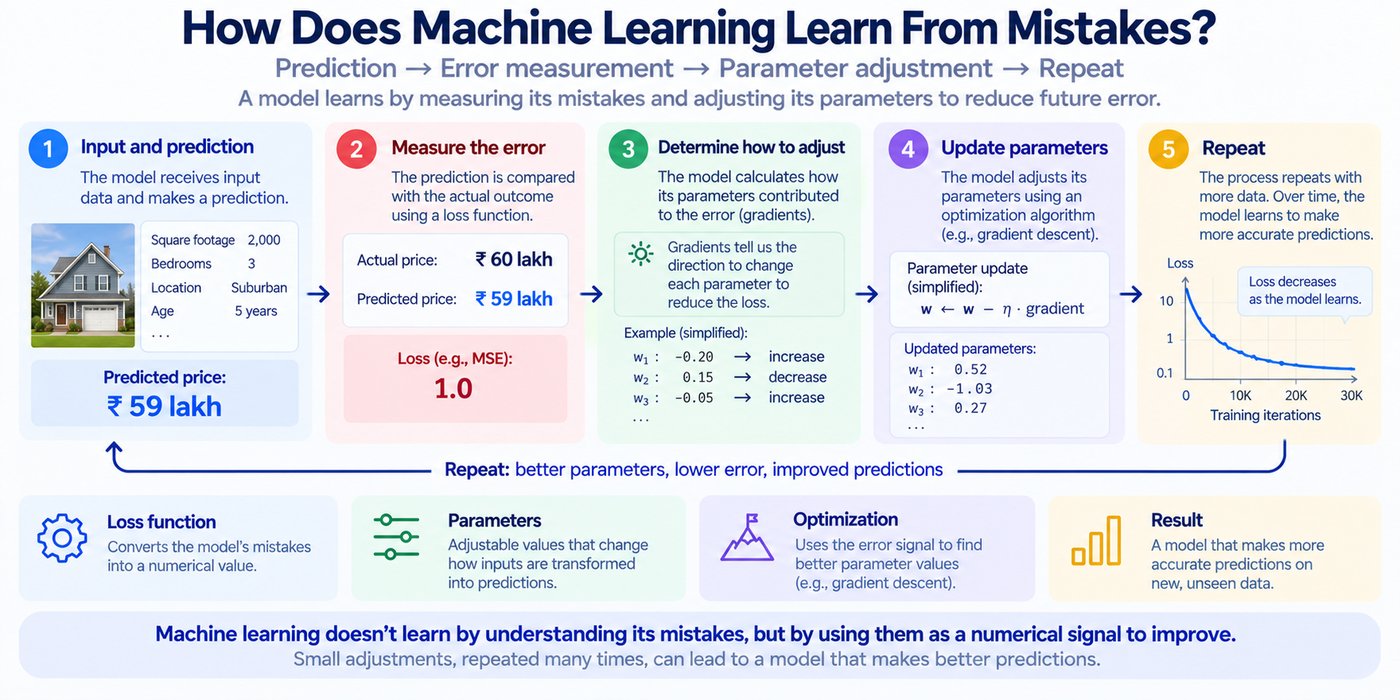
How Does Machine Learning Learn From Mistakes?
One of the most important ideas in machine learning is surprisingly simple: A system cannot improve unless it has some way to measure how wrong its predictions are. A model can make predictions endlessly: But prediction alone is not enough. The system needs feedback that tells it whether those predictions are improving or getting worse.…
-
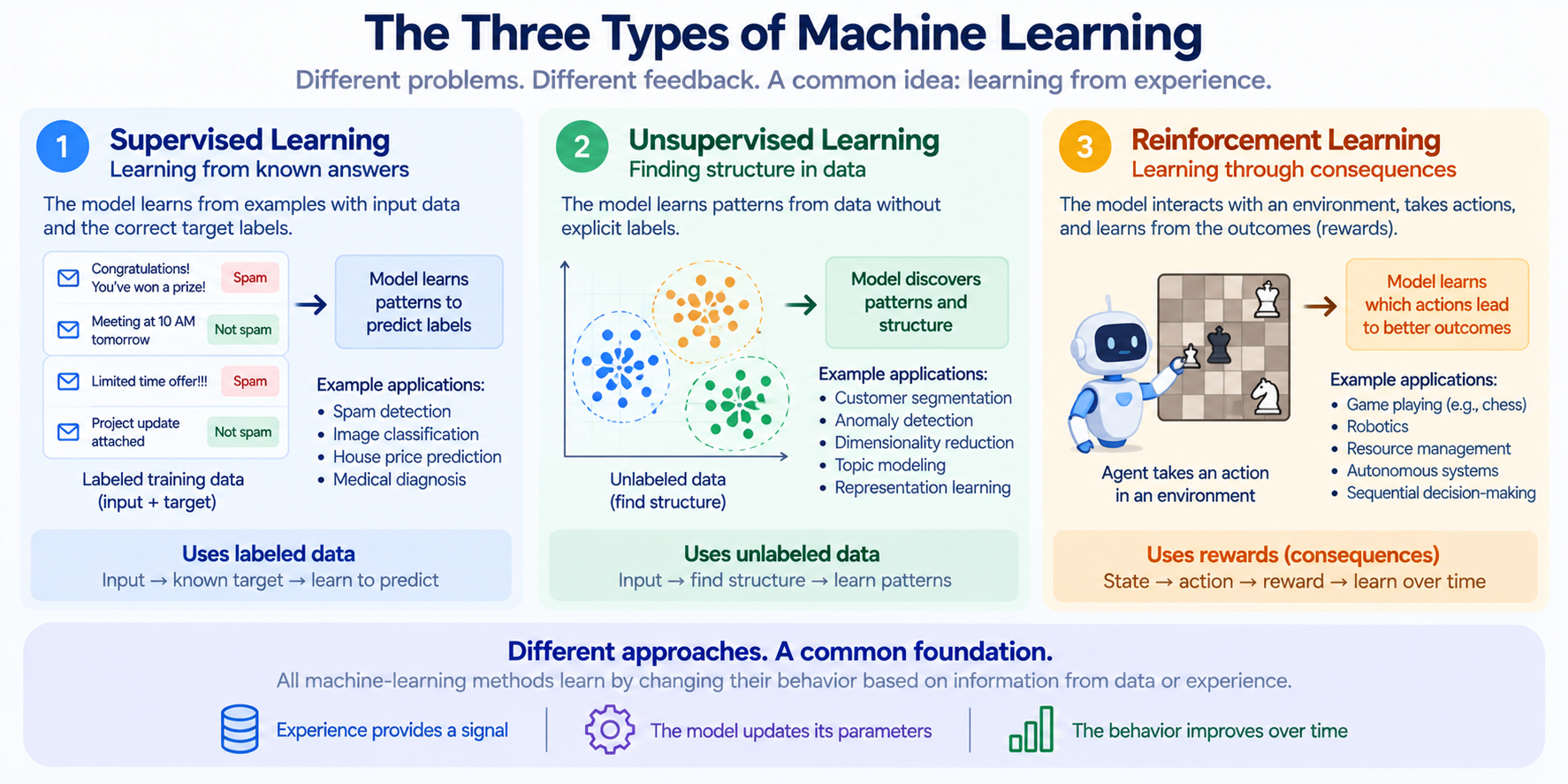
The Three Types of Machine Learning: Supervised, Unsupervised, and Reinforcement Learning
One of the most important things to understand about machine learning is that not all learning works the same way. There are different types of machine learning. But people often talk about “AI learning” as if there were one universal mechanism underneath everything. But a more fundamental question comes first: What kind of feedback does…
-
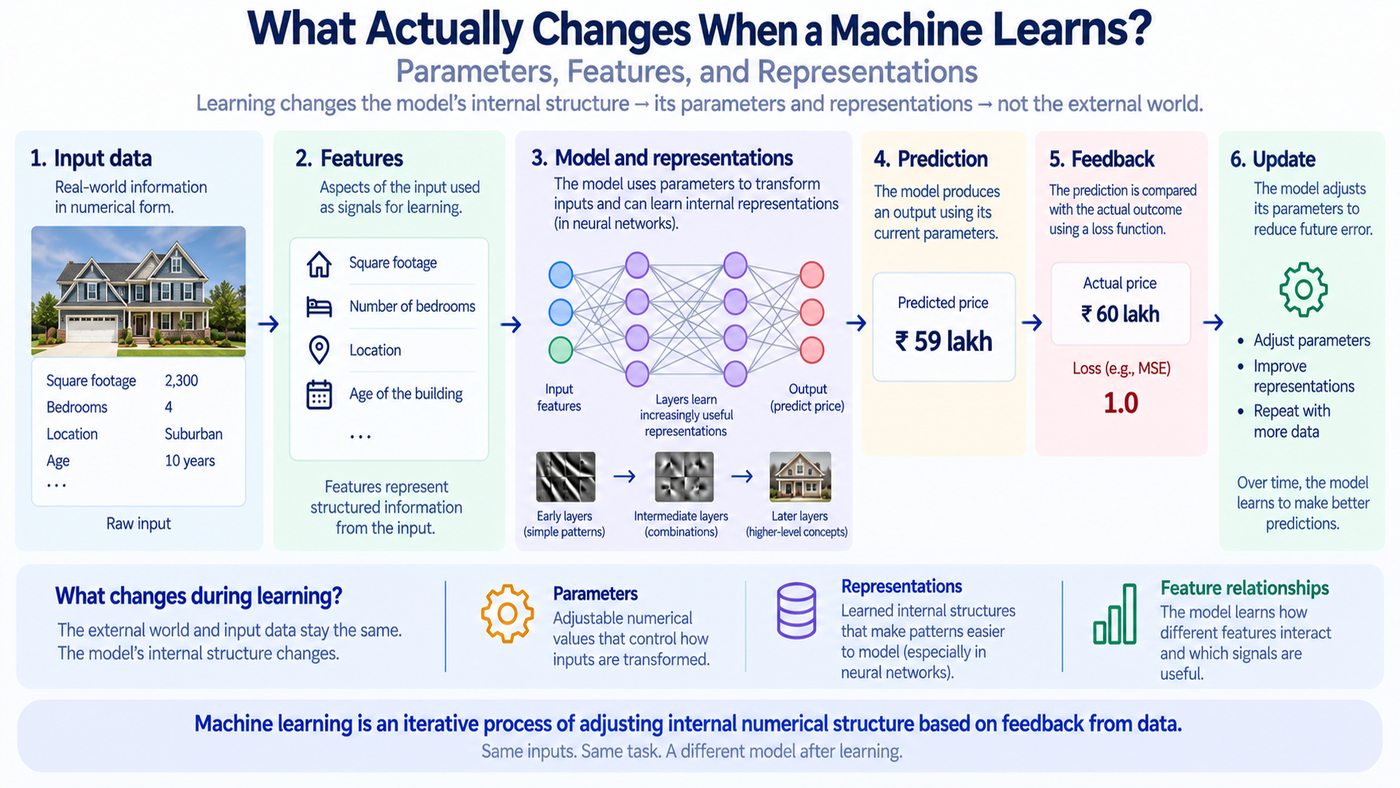
What Actually Changes When a Machine Learns? Parameters, Features, and Representations
One of the easiest ways to misunderstand machine learning is to imagine that a system somehow becomes “smarter” in a vague or magical sense. But if you strip away the terminology, a much simpler question appears: What changes when a machine learns? Something clearly changes. The inputs remain the same kind of inputs. The task…
-
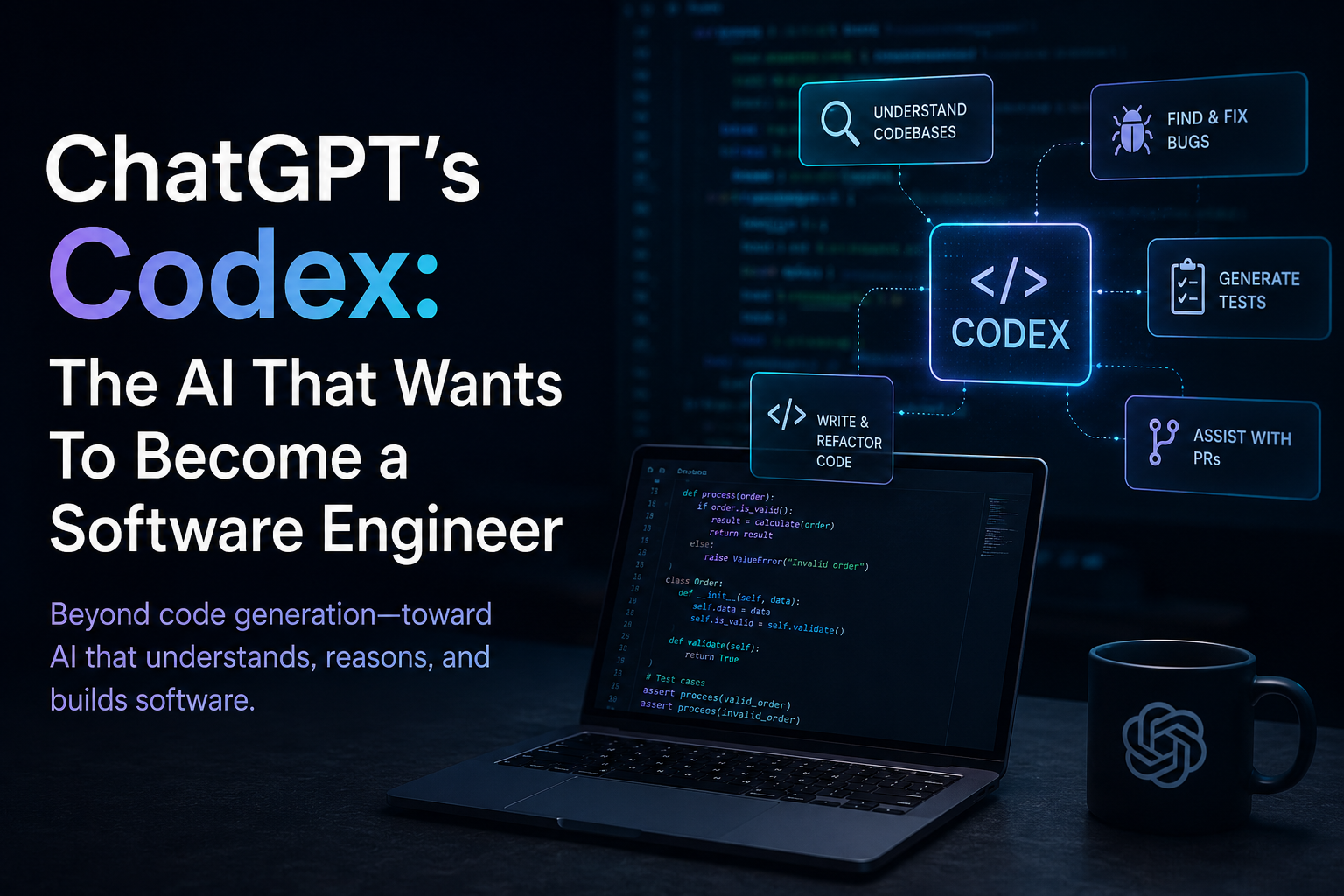
Understanding ChatGPT’s Codex: The AI That Wants to Become a Software Engineer
Most people think Codex is just an AI that writes code. But I think that framing misses something important. Because writing code is only one small part of software engineering. Real development work usually involves something much messier: And this is exactly where Codex becomes interesting. To understand what Codex actually is, it helps to…